


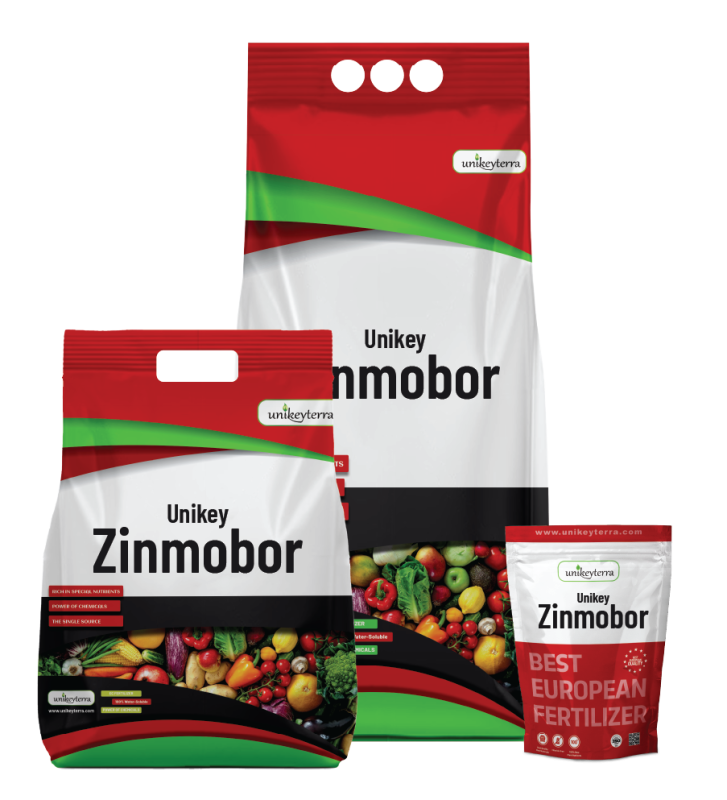
BORON (B), MOLYBDENUM (Mo) and Zinc (Zn) MICRO PLANT NUTRIENTS BLEND
In the formulation produced with high-quality raw materials, it is absolutely necessary for the productivity of plants; boron, molybdenum and zinc are offered in different proportions. It is aimed to provide alternative nutrition and treatment opportunities that will respond to the deficiency symptoms of these three elements observed in plants. Uni Zinmobor, which can be taken by plants, is completely EDTA-chelated, contains 11 % molybdenum (Mo), 8 % boron (B) and a high level of 5 % zinc (Zn). In order to distinguish it from other products on the market and increase its effectiveness, it is supported by organic compounds and amino acids.
Uni Zinmobor contains molybdenum (Mo); it is an absolutely essential plant nutrient element for very important functions in nitrogen and phosphorus metabolism, which increases plant production. It also plays a role in the uptake of iron and phosphorus. Since it enables the reduction of nitrate nitrogen to ammonium nitrogen, deficiency symptoms are similar to nitrogen deficiency symptoms. In molybdenum deficiency, soil-borne diseases progress more easily in the plant, flowers fade, the plant becomes stunted, vitamin C formation is prevented and the amount of chlorophyll decreases. Necrosis occurs in the growth cone of example plants such as cauliflower. Molybdenum is an important element for the productivity of legume plants. Mo is vital for the process of symbiotic nitrogen (N) fixation by *Rhizobia* bacteria in legume root nodules; Mo content also prevents nitrate accumulation in leaves and ensures normal development.
B (Boron): It is very active in the germination and elongation of pollen (flower dust), increasing fruit set, transporting calcium, forming sugars and carbohydrates, and forming vegetative growth hormones; it prevents necrosis and fruit spots in buds. Deficiency causes poor fertilisation and fruit formation, death in the growth cone, deformities in leaves, and cracking or rotting in trunks.
Zn (Zinc): Included in growth hormones, it increases flowering and fruit set and prevents fruit drop. It provides homogeneous development by encouraging root growth, helps plants resist cold and heat, while deficiency leads to fewer fruit buds, flowering and leaf fall; the most obvious symptom is dwarf plants with rosettes on terminal leaves.