FRUIT GROWTH AND MATURATION
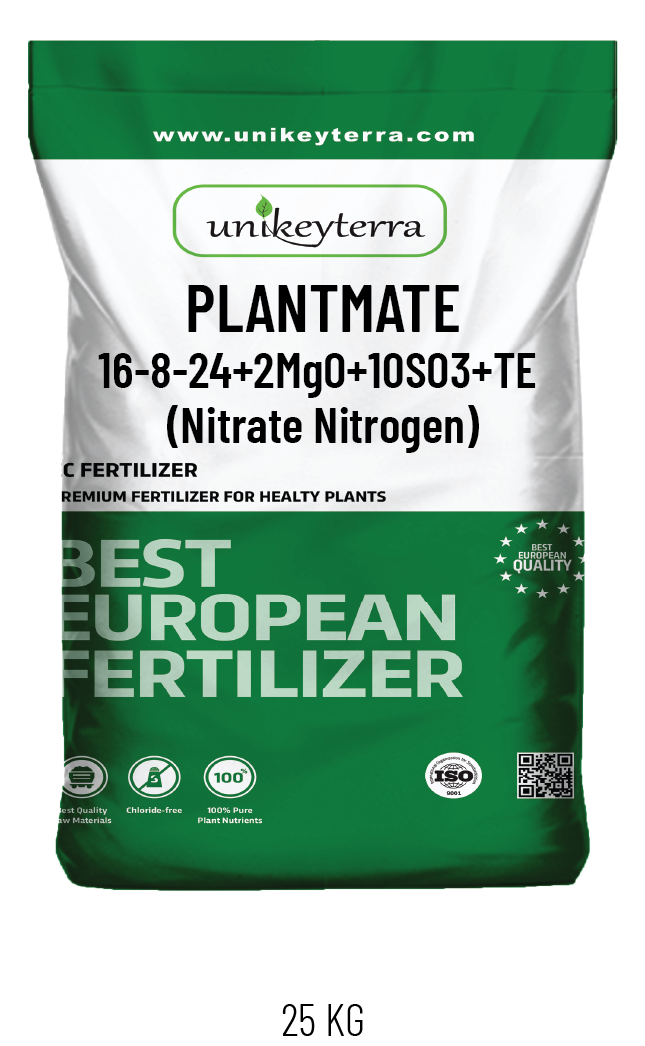
Fertilizer selection and fertilization should be done very carefully when feeding plants grown with drip irrigation. In its production, Plantmate 16-8-24+2MgO+10SO3+TE is completely water-containing, with high nutritional value, in order to meet the needs of plants for macro plant nutrients such as N, P, K and micro elements such as B, Cu, Fe, Mn, Mo, Zn. and fast-dissolving pure raw materials were used. It has an ideal structure that can provide a suitable nutrient environment in the limited root area of the plant throughout the growing season. Contains additional magnesium (Mg) and sulfur (S). While magnesium increases photosynthesis, the presence of sulfur in its content ensures maximum assimilation of nutritional elements by plants. It does not contain urea nitrogen, but contains nitrate nitrogen, which facilitates ideal cation uptake and effective nitrogen use. Nitrate nitrogen should be preferred for plants that grow rapidly and require frequent fertilization. Because it becomes easier for the plant to absorb calcium and magnesium, the roots are prevented from being stressed when the soil temperature is high, and nitrogen loss through evaporation is prevented. By using a chelating agent suitable for the properties of metallic trace elements, their uptake by plants is facilitated in a wide soil pH range. Since it does not contain unnecessary salt elements, problem-free fertilization and high productivity are aimed during the vegetation period in salt water and soils.
Method of Application and Dosages
It is a fertilizer applied directly to the soil or via a drip irrigation system. It is suitable for greenhouse and open field vegetables, edible vegetables, fruit trees, citrus fruits and bananas, vineyards, cut flowers, and soils where potassium intake is difficult. It is applied at 7-10 day intervals during the ripening period when the potassium need of the plants is at its highest level. 0.5-1.5 kg/da/day is applied from the soil with irrigation water. (Excluding Cereals and Green Areas) These values are recommendations. This amount; It may vary due to reasons such as climate, soil type, air temperature, type of plant, productivity status, and difference in irrigation system. Appropriate doses can be determined by expert consultants with technical knowledge on this subject, according to agricultural analysis results and the development status of the plants. Do not exceed the recommended application amount.